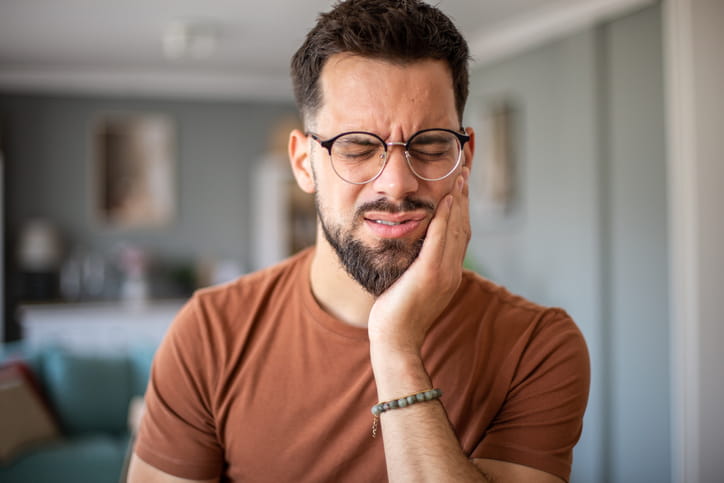
Causes and Risk Factors for Dry Sockets
The most common cause of a dry socket after wisdom tooth extraction surgery is not following your doctor’s instructions following the procedure.
Dry sockets often happen because patients perform activities that involve sucking. In particular, the use of drinking straws and tobacco products, such as cigarettes and vapes, can cause dry sockets, due to the negative pressure created in the mouth when sucking.
Poor oral hygiene may be a factor as well. Without proper aftercare according to your dentist’s instructions, bacteria may help dissolve or loosen the clot.
While these are the most common risk factors, dry sockets can still happen to people who follow all instructions closely.
How a Dry Socket Is Diagnosed
Dry sockets are most often diagnosed with a visual inspection by a dentist. At Absolute Dental in Minden, if you report worsening pain after a wisdom tooth extraction, we can perform a clinical examination to diagnose the problem.
During the examination, the dentist will inspect your mouth and look for signs of additional infection or bacterial growth. In general, diagnostic tools, such as X-rays, are not needed to affirmatively diagnose the condition.
Treatment for Dry Sockets
While dry sockets can be painful, the good news is that there are effective treatments. First, your dentist will likely begin with a thorough cleaning of the site. You may also receive gauze or other type of medical dressing, and, in some cases, with a topical pain reliever, to protect the site.
You will also receive instructions for taking pain relievers. For some, over-the-counter medications will suffice, but, in most cases, your dentist will prescribe prescription medications that can help keep the pain at bay.
At Absolute Dental, we have the ability to prescribe medication, including pain medication and antibiotics, if needed. We also offer many kinds of sedation dentistry for those who have a fear of dental procedures or are in a great deal of pain and would benefit from sedation.