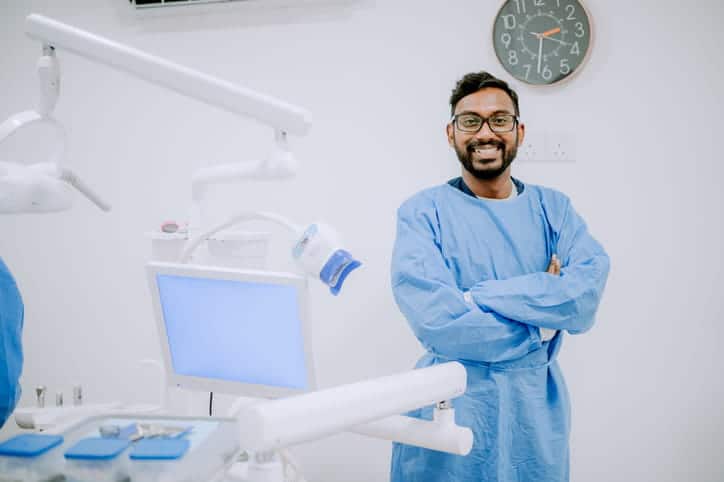
At Absolute Dental, we believe that patient care goes beyond routine cleaning and dental fillings. When you visit us, we want to take care of your total wellness. This includes serious issues like oral cancer.
Oral cancer can be life-threatening if left untreated. However, early diagnosis can save your life. The earlier signs of cancer in the mouth are caught, the better the outcomes. Oral cancer doesn’t have to be a death sentence.
While the information provided on this page is intended to be educational, and we’re proud to help you understand oral cancer warning signs, this information is not a substitute for professional medical advice. However, a simple oral cancer screening is a vital part of every complete check-up we offer here at Absolute Dental.
Today, we’ll discuss how to recognize mouth cancer symptoms, and the connection between oral health and cancer.
Oral cancer is a type of head and neck cancer that can develop in any part of the oral cavity. The parts of the body considered to be in the oral cavity include the lips, tongue, gums, floor of the mouth, inner cheeks, and hard palate.
Oral cancer can also affect the throat and tonsils. When this happens it is referred to as oropharyngeal cancer.
Oral cancer most commonly starts in the thin, flat squamous cells that line the mouth. This kind of cancer is known as squamous cell carcinoma. Left untreated, these cancer cells can grow and affect other areas of the mouth, and eventually, the body.
Oral Cancer Symptoms
Early signs of oral cancer can be subtle and often painless. Persistent mouth sores or other symptoms like red or white patches should be monitored, and regular oral cancer self-exams are a good idea.
Common Symptoms and Signs of Oral Cancer
Specific symptoms of oral cancer can include:
Persistent mouth sores: A sore on the lip, tongue, or elsewhere in the mouth that does not heal within two weeks is a common symptom.
Red or white patches (leukoplakia and erythroplakia): Precancerous changes often appear as white patches or red patches on the gums, tongue, or buccal mucosa.
Lumps and bumps: Potential signs, such as a lump in the mouth, on the tongue, or in the jaw or neck could be cancer. Swollen lymph nodes in the neck can also be a sign of advanced cancer.
Difficulty swallowing or chewing: Trouble swallowing (dysphagia) or difficulty chewing is a potential sign of a tumor affecting the throat or other areas.
Pain and numbness: Unexplained bleeding, persistent pain, or numbness in the mouth, face, or neck can be other signs of cancer.
Unexplained weight loss: Weight loss can also be a symptom of advanced cancer.
Other symptoms can include loss of sensation, changes in voice, or loose teeth.
If you have any of these symptoms and they do not go away within a couple of weeks or are worsening, you should contact your doctor right away. The earlier cancer is caught, the more effectively it can be treated.
Take advantage of our limited-time offer and enjoy 20% off your general dentistry treatment plan. At Absolute Dental, we’re committed to delivering expert, affordable care that prioritizes your smile. Hurry—this promotion ends on 12/31/26! Schedule your appointment today to experience top-quality dental solutions designed just for you.
Hear From Our Patients
thank u for taking care of my boys :)
I love their Orthodontist office Dr. Askin is a great man great staff as well thank u for taking care…
Google -
A. Lane
They make sure you're in no pain when they do teeth fillings
They staff is so caring and they always try and get me in as fast as possible also they make…
Google -
Alison M. - Tooth Filling
Great atmosphere and customer service!
One of the best experience I've have with Absolute Dental. I love the customer service that is given to all…
Google -
Alondra C.
Give great direction on handling charges and insurance!
I love this place because they are really down to earth. Not stuffy like most medical offices. The staff will…
Yelp -
Angelina M.
Same day teeth cleaning and a teeth whitening
I had a toothache, got that taken care of same-day with teeth cleaning and a teeth whitening. If you need…
Google -
Anthony F.
Kayleen did a great job polishing my teeth!
I am very happy with the care for my teeth and gums that I have been getting coming here. I…
Facebook -
Bernard W.
Love everyone at Absolute Dental Orthodontics!!
I have and will continue to recommend Absolute Dental Orthodontics to anyone that would like nice people who are always…
Are There Specific Activities That Can Increase My Risk?
Tobacco use is an oral cancer risk: Chewing tobacco, smoking, and vaping can all contribute to oral cancer.
Alcohol and oral cancer: Heavy alcohol consumption is a major risk factor for oral cancer.
Human papillomavirus (HPV): Certain strains of HPV can also help cause oropharyngeal cancer.
Sun exposure: Prolonged sun exposure can increase the risk of lip cancer, a form of skin cancer.
Other risk factors can also include age, family history, and diet.
Can I Prevent Oral Cancer?
Oral cancer prevention tips include quitting smoking, limiting alcohol intake, practicing safe sun exposure, and maintaining a healthy diet. You should also brush your teeth twice per day, floss in the evening, and see a dentist every six months or as directed for a check-up.
One of the most important factors in how to detect oral cancer early is regular dental check-ups. These can help you receive oral cancer dentist advice while getting your teeth cleaned. At Absolute Dental, an oral cancer screening is free and performed with every examination.
Oral Cancer Diagnosis Process
The process of an oral cancer screening is conducted by a dentist during a routine check-up. A dentist can then make an initial diagnosis and refer you to more tests or a specialized doctor.
The initial screening includes a visual examination of your jaw, mouth, and oral cavities. We’ll also feel around these areas, including the neck, to see if we notice any bumps, oral lesions and cancer, or anything else out of the ordinary.
These exams are painless and take just a few minutes. They are provided free with all of our check-ups and cleanings.
What Happens if a Suspicious Lesion Is Found?
If a suspicious lesion is found, we will provide you with oral cancer treatment options. The next steps may include a biopsy, which is a medical process that involves taking a tissue sample of the suspected area, or a referral to an oral and maxillofacial surgeon or oncology doctor.
One of the most important factors when cancer is diagnosed is determining the stage of the cancer. The further cancer is along generally means the further it has spread throughout the body. Catching cancer early before it has spread elsewhere is always best.
If the cancer has spread to other organs or other parts of the body, it is considered to be advanced. The best prevention to cancer spreading is catching it early.
We Accept Most Dental Insurance
Absolute Dental is a preferred provider for most insurances, unions, and hotels that include: Aetna, Ameritas, Boon-Chapman, Caesars Palace, Cigna, Delta Dental, Diversified, Geha, Guardian, Harrah’s, HealthSCOPE Benefits, Health Plan of Nevada (HPN), Humana, Liberty, Met-Life, MGM-MIRAGE, Premier Access, The Standard, Station Casinos, Teachers Health Trust, United Concordia, United Healthcare, Venetian, and The Zenith. We also accept Medicaid.
If you do not see your dental insurance listed here, just give us a call to confirm!
Surgery: Often performed by a maxillofacial surgeon, this is the primary treatment for early-stage cancers.
Radiation therapy: Radiation therapy is a common treatment, often used in combination with other methods.
Chemotherapy: Chemotherapy can help treat more advanced stages of head and neck cancers.
Combined therapies: A combination of these treatments is often used to ensure all cancer cells are addressed.
What To Expect After Treatment and When To Contact a Doctor
After an oral cancer diagnosis, the need for ongoing check-ups to monitor for recurrence is crucial.
When Should I Contact My Healthcare Provider?
If you do have any symptoms of oral cancer, such as a sore or lump that does not heal within two weeks, it’s crucial to seek professional advice. You should also contact your doctor immediately if you experience any new or worsening symptoms.
Yes. While oral cancer generally doesn’t originate in the teeth, oral cancer impacts the gums and other tissue surrounding them. It can eventually cause loose or lost teeth, and other problems if left untreated.
In many cases, yes, a dentist can spot precancerous changes in your mouth. One of the best defenses against oral cancer is by receiving regular screenings. These are performed at Absolute Dental for free with a regular check-up and cleaning.
Oral cancer originates in the mouth, while skin cancer originates in the skin. However, sun exposure can cause cancer on the lips. Always wear sunscreen, including on the lips, when spending prolonged time outside.
Symptoms associated with a throat infection can sometimes be indicative of cancer. If you have symptoms like a sore throat or hoarseness that last longer than two weeks, contact a doctor.
The role of these doctors is to diagnose and treat oral cancer. They can remove tumors surgically, perform biopsies, and collaborate with other doctors to treat and diagnose cancer.