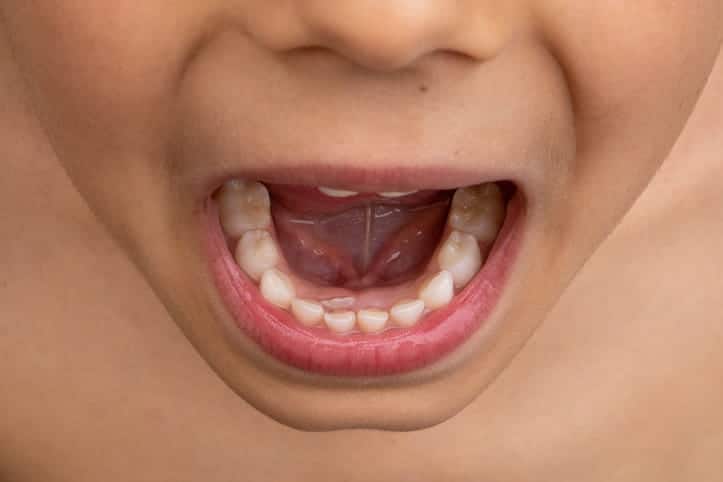
What Is A Cavity On A Kid’s Tooth?
A cavity occurs when the enamel on a tooth breaks down. When this happens, holes or small cavities begin to form on the tooth. These holes can appear white but may turn brown and black over time.
Poor oral hygiene habits, such as failing to floss or brush twice a day, contribute to plaque buildup, which eventually results in cavities.
How To Tell If Your Child’s Tooth Has A Cavity
Cavities, especially in their early stages, can be difficult to spot. Over time, you may hear your child complain of aches or pains around the affected tooth. When this happens, this is a general sign that your child may have a cavity. Common signs that a cavity is forming include:
- White spots develop on the affected teeth. These white spots are an indication that your enamel is breaking down.
- Brown spots indicate a cavity has formed. Over time, this spot will turn darker in color and grow larger.
- Pain when biting or chewing down on the impacted tooth
- Sensitivity
How Do You Fix A Cavity In Your Child’s Tooth?
If your child has a cavity, a dental filling is one of the most effective methods for treating it and stopping it from growing further.
Dental fillings are safe for adults and children. This simple dental procedure involves a dentist administering a local anesthetic in the area of the impacted tooth. This will keep your child from feeling any pain during the treatment.
Next, the dentist will remove the portion of the tooth that is decaying with the cavity growth. When that decay has been removed, the filling will be placed in.